
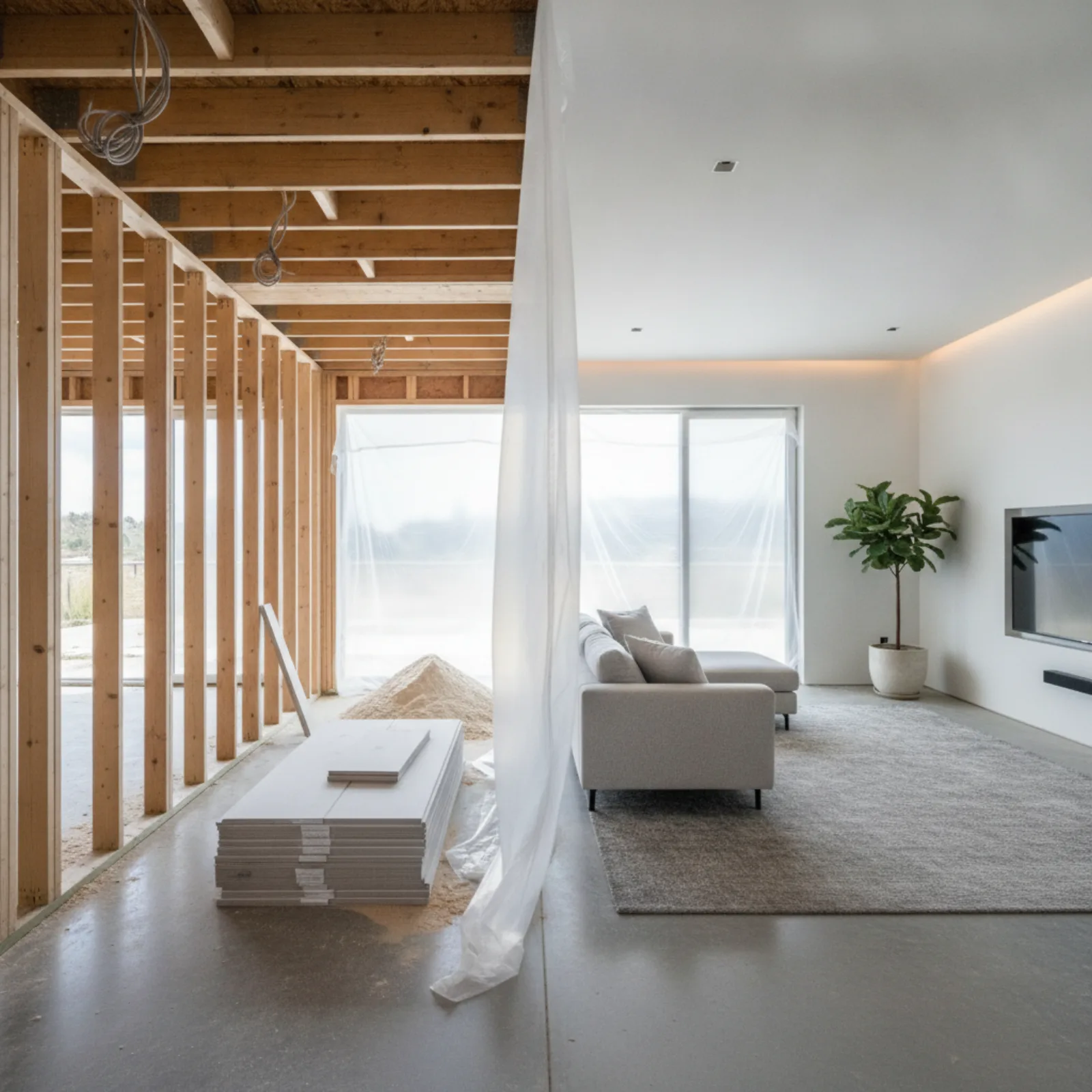
The most common question I hear before a project starts is some version of “how long is this going to take?” It’s a fair question. You’re planning around contractors in your home, meals without a kitchen, maybe a displaced family member or two. You need a number.
The honest answer is that a home remodel timeline depends on scope, materials lead times, permit processing, and what we find when we open the walls. But real ranges do exist. Here’s what they look like and what makes them stretch.
Phase 1: Design and Planning (2–6 Weeks)
Before anyone swings a hammer, you need a plan the city will approve and a contractor who can price it accurately. This phase includes finalizing the design, selecting materials and fixtures, and preparing permit drawings if required.
Simple projects, like a bathroom refresh with no layout changes, can move through design quickly. Anything structural, any addition, any project that requires an architect or structural engineer will take longer. Don’t rush this phase. Changes made on paper cost almost nothing. Changes made mid-construction cost real money.
What Slows It Down
Indecision on finishes. Tile, cabinetry, fixtures, countertops: many of these items have 4–12 week lead times. If you haven’t selected them before construction starts, those lead times become delays that stop your crew cold while they wait for materials.
Phase 2: Permits (2–8 Weeks, Sometimes More)
San Diego County municipalities vary on permit processing times. Some cities are running 3–4 weeks. Others are backed up to 8 weeks or more, especially for structural work and additions. ADUs have their own review track.
We submit permit applications as early as possible and follow up proactively. But once it’s in the city’s hands, it moves at the city’s pace. Plan for this in your schedule rather than being surprised by it.
Permits aren’t bureaucratic delays, they’re the thing that protects your investment. A project built without permits can create serious problems when you sell or refinance.
Phase 3: Demo and Site Prep (1–2 Weeks)
Once permits are in hand, demo usually moves fast. Removing old tile, cabinets, walls, and fixtures is physical and straightforward. What slows demo down is what we find underneath: outdated plumbing, knob-and-tube wiring, mold, dry rot, or structural issues that weren’t visible from the outside.
This is the phase where surprises happen. A good contractor accounts for this possibility in the project budget and schedule. We do. It’s not a scare tactic, it’s an honest reflection of what 30-year-old homes in San Diego County sometimes contain.
Phase 4: Rough Work (1–4 Weeks)
Rough work is everything that goes inside the walls before they’re closed: framing, plumbing rough-in, electrical rough-in, HVAC. Each trade needs to be inspected and approved before the next phase begins.
For simple projects this moves quickly. For larger scopes involving multiple trades, coordination matters. Scheduling subcontractors in sequence, not just in parallel, is part of what makes a project run well or run late.
Phase 5: Finishes (2–6 Weeks)
This is drywall, texture, paint, tile, cabinetry installation, countertops, fixtures, trim, and flooring. The duration depends almost entirely on scope and material availability.
Custom cabinetry, specialty tile, and stone countertops all have lead times that can push this phase out. Stock cabinetry and in-stock materials let this phase move faster. There’s a real trade-off between lead time and customization that’s worth talking through before you commit to a design.
Real Timelines by Project Type
Here’s where everything adds up to a number you can actually plan around:
Bathroom remodel: 3–6 weeks for construction, assuming permits and materials are in place beforehand. A full gut and rebuild with a new layout runs 5–6 weeks. A cosmetic remodel with no layout changes can finish in 3.
Kitchen remodel: 6–12 weeks. Most of that is cabinetry lead times, countertop fabrication, and appliance delivery. The actual construction window is often shorter. The planning and material selection phase matters enormously here.
Room addition: 3–5 months from permit approval to completion. More if it involves significant structural changes or multiple inspections. The permit process alone can take 6–8 weeks before construction begins.
Whole-home remodel: Several months, depending on how much is being touched. A full interior renovation of a 1,500 sq ft home runs 4–6 months if planned well. Add an addition or major structural work and you’re in 6–9 month territory.
What Causes Projects to Run Long
Most delays come from a short list of causes:
Late material decisions. The single biggest controllable delay. Finalize your tile, cabinetry, and fixtures before we break ground, not during.
Change orders mid-construction. Changing the layout, adding scope, or upgrading finishes after work starts adds time and cost. Not because contractors take advantage of it, but because it genuinely takes more time.
Hidden conditions. Older homes have surprises. We address them efficiently and transparently, but they take real time to fix correctly.
Permit delays. Outside our control, but we account for them in project timelines from the start.
Subcontractor scheduling. Busy seasons (spring and fall in San Diego) mean trade schedules fill up. We plan ahead to keep your project moving.
Start with an Honest Conversation
A realistic timeline starts with understanding your project clearly before we ever pull a permit. I’ve been in construction long enough to know when something will go fast and when it won’t, and I’ll tell you straight.
I’m on every job site, I speak Spanish, and I give free in-home estimates throughout San Diego County. Call or text David at (760) 524-1754 to schedule yours. We’ll walk the space together, talk through your goals, and give you a timeline that reflects reality, not wishful thinking.